
India vs Zimbabwe T20I Series 2026: Everything You Need to Know About the Harare Showdown

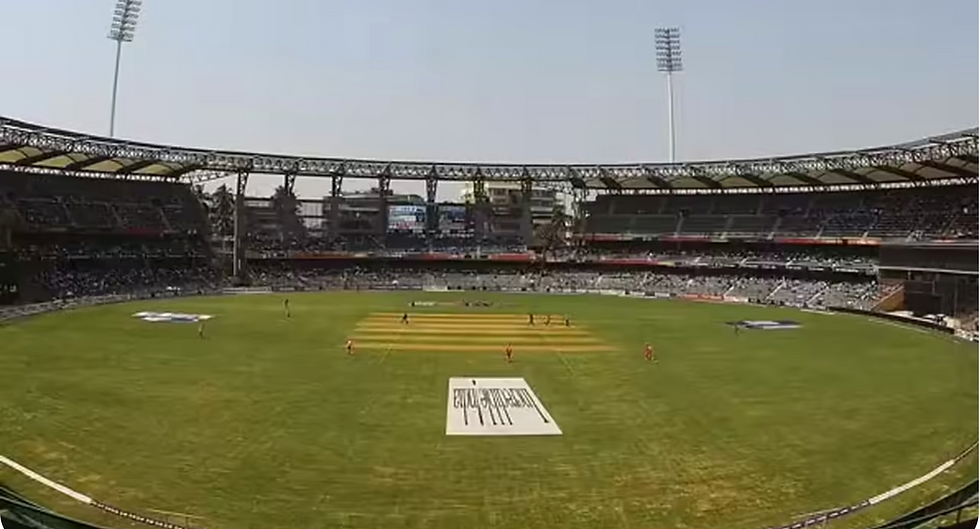
The Harare Sports Club opens its gates today for the first of three T20 Internationals between India and Zimbabwe — a series that carries far more significance than the bilateral fixture list might initially suggest. On paper, this is India touring one of international cricket's lower-ranked T20 nations with a largely experimental squad. In reality, it is a series that could define the near-term future of Indian T20 cricket, reshape the captaincy narrative around Shreyas Iyer, give a 15-year-old batting prodigy his first look at international cricket in Africa, and set the tone for an Indian side that has suffered back-to-back T20I series defeats and desperately needs momentum heading into a calendar that only gets more demanding from here.
Zimbabwe, meanwhile, arrive at this series on the back of a creditable home campaign against Bangladesh, with a settled squad built around experienced match-winners and a captain in Sikandar Raza who recently became the most capped Zimbabwean international in the history of their cricket. For Zimbabwe, this is not simply another home series — it is the kind of occasion that their cricket infrastructure was built for, and the home crowd at Harare will be giving the hosts everything they need to produce the kind of upset that the rankings suggest is unlikely but recent form makes entirely plausible.
All three matches will be played at the Harare Sports Club. The first T20I takes place on July 23, the second on July 25, and the third and final match on July 26, with all games scheduled to begin at 4:30 PM IST. Fans in India can watch on Unite8 Sports channels and stream live on FanCode.
At Reddy Anna, we have been tracking Indian cricket's white-ball transition closely through this calendar year, and the Zimbabwe series is one of the most intriguing chapters in that story. Here is the complete breakdown of everything that matters about this series.
The Context: India's Urgent Need for a Reset
To understand why this series matters as much as it does for India, you need to trace the thread of results that has led Shreyas Iyer and his squad to Harare in July 2026.
India's T20I year has been difficult in ways that have provoked genuine discussion about the state of the format under the current selection and leadership framework. In the recently concluded five-match T20I series in England, India suffered a 4-0 defeat — a result that followed an earlier series loss to Ireland and left India's white-ball T20 confidence at a low point heading into the Zimbabwe tour. For a nation that won the T20 World Cup not long ago and considers itself among the elite of the format, back-to-back series defeats — including a 4-0 hammering in England — demand a response that goes beyond personnel changes.
Shreyas Iyer is yet to register a victory as India skipper, having suffered defeats in his previous seven matches in charge. That statistic sits heavily over a captain who is clearly capable of leading — and who has the respect of his squad — but who has not yet had the results to build the kind of authority that transforms a good captain into a trusted one. Zimbabwe presents the most realistic opportunity on the current calendar for that to change, and the manner in which Iyer and his team approach all three matches will be watched with considerable interest.
The selection changes that have accompanied this tour reflect the seriousness with which the selectors are taking the need for a reset. The biggest talking point around the squad is the exclusion of Sanju Samson — just months after being named Player of the Tournament at the T20 World Cup, the wicketkeeper was dropped mid-series in England and has now been left out of the Zimbabwe setup completely. It is a decision that has generated significant debate among fans and analysts, but the selectors have been clear in their messaging: this is a squad being built with the medium-term future in mind, and the Zimbabwe series is an opportunity to give that future some playing time.
The squad blends the young core from the England tour with a batch of fresh faces, handing maiden call-ups to uncapped trio Harsh Dubey, Ashok Sharma, and Prabhsimran Singh. Each of those three carries a story and a promise — Prabhsimran Singh in particular has been one of the most talked-about young batting talents in domestic cricket for the past two seasons, and his international debut in Zimbabwe will be one of the headline storylines of the tour.
India's Squad: The New Era Taking Shape
The India squad for the Zimbabwe T20I series tells you a great deal about where the selectors want Indian T20 cricket to go. This is a group built around pace, youth, and a batting lineup that prioritises strokeplay and power from the outset — the hallmarks of what India's best white-ball teams have always possessed.
Shreyas Iyer captains the side, with Tilak Varma named his deputy. The squad includes Vaibhav Suryavanshi, Abhishek Sharma, Ishan Kishan, Shivam Dube, Suryansh Shedge, Rinku Singh, Harsh Dubey, Prince Yadav, Yash Thakur, Ashok Sharma, Mayank Yadav, Prabhsimran Singh, and Ravi Bishnoi.

Vaibhav Suryavanshi is the name that has generated the most excitement around this tour, and rightly so. At 15 years old, he is one of the youngest players ever to be included in an Indian senior squad, and the anticipation around his potential international debut is enormous. Suryavanshi is excited to play in Harare — he scored 175 off 80 balls in the Under-19 World Cup final at this venue — a statistic that tells you everything about the kind of player he is and why the selectors have backed him to make the step up. If he gets the opportunity to bat in Harare, the Harare Sports Club crowd will witness something that has not been seen before: a 15-year-old opening the batting for India in T20 International cricket.
Tilak Varma has been one of India's most consistent T20 performers across the past eighteen months, and his appointment as vice-captain reflects the confidence that the management has in his leadership qualities as well as his batting. Tilak has reflected on India's defeats against Ireland and England and spoken openly about what the Zimbabwe tour represents as an opportunity to rebuild confidence and establish combinations going forward. His maturity in public comments has mirrored his maturity at the crease.
Abhishek Sharma is one of the most exciting openers in Indian domestic cricket and carries the kind of natural power hitting that T20 cricket at the top of the order demands. His international exposure has been building steadily, and Zimbabwe represents the kind of conditions — pace-friendly tracks, smaller outfields — that suit his strengths.
Ishan Kishan returns as the primary wicketkeeper-batsman and brings international experience that the squad as a whole is somewhat short on. His performances in this series will be closely watched, given the backdrop of the Sanju Samson omission.
Rinku Singh has established himself as one of the most dangerous finishers in Indian cricket since his emergence through IPL cricket, and his ability to score at high strike rates in the middle and death overs gives India a weapon that opposition bowlers genuinely fear in the final five overs.
Ravi Bishnoi replaces the injured Varun Chakravarthy as the primary leg-spin option. Chakravarthy had also missed the final two matches of India's recent T20I series in England, and medical assessments confirmed he would not be available for the Zimbabwe tour. Bishnoi is a different kind of leg-spinner to Chakravarthy — more classical in his approach, less reliant on mystery variations — but he brings significant T20 experience and the ability to take wickets in the middle overs.
Mayank Yadav is the pace bowling asset in this squad who has been generating excitement since he first burst onto the IPL scene with his raw speed. At international level, his ability to hit 150kmh consistently makes him a genuine match-winner in the short format, and Zimbabwe's batting order will need to find an answer to genuine pace if Mayank is at his best.
Zimbabwe's Squad: More Dangerous Than the Rankings Suggest
It would be a significant mistake to read Zimbabwe's T20I ranking of 12th in the world and assume that the home series against India will be straightforward. The rankings tell you about accumulated results across a long period; they do not tell you about the form and confidence of a Zimbabwe side that has been building quietly and effectively through the home season.
Zimbabwe are led by Sikandar Raza, who recently became the most capped Zimbabwean international across all formats with 314 appearances. Raza is one of the most respected figures in international cricket — not simply within Zimbabwe but across the global game. His off-spin is miserly and dangerous, his lower-order batting has won matches that Zimbabwe had no business winning, and his leadership carries the kind of calm authority that comes from having played international cricket at the highest level for well over a decade.
Zimbabwe's squad also includes Ryan Burl, Brian Bennett, Blessing Muzarabani, Richard Ngarava, and Wellington Masakadza — names that have all contributed to a Zimbabwe side that, on their home tracks, is capable of competing with and beating sides ranked significantly above them.
Blessing Muzarabani is Zimbabwe's standout bowler in every format and one of the most naturally gifted fast bowlers in African cricket. His ability to hit the pitch hard and extract bounce from Harare's surface makes him genuinely threatening against any batting order, and his recent form against Bangladesh — where he and Ngarava took four wickets between them in the first T20I as Zimbabwe won by 32 runs — confirms that he is in excellent rhythm heading into the India series.
Brian Bennett has been one of Zimbabwe's most exciting young batting talents over the past twelve months. His partnership with Dion Myers provided the backbone of Zimbabwe's batting against Bangladesh, and against India's pace attack he will need to show the same composure and stroke-making ability in a significantly tougher contest.
Richard Ngarava complements Muzarabani as an opening bowling partner, bringing left-arm angle and the ability to swing the ball in early overs. His performances against Bangladesh were efficient and disciplined — exactly what Zimbabwe need from their new-ball partnership if they are to restrict India's batsmen to a manageable total.
The Zimbabwe squad also features Wessly Madhevere and Newman Nyamhuri, who return for the series, along with Tafadzwa Tsiga earning a call-up to the Zimbabwe T20I side for the first time.
The Bangladesh Series: What Zimbabwe Showed Last Week
The best preview of what Zimbabwe brings to this India series is the footage from the Bangladesh T20I series that concluded just days ago at Queens Sports Club, Bulawayo.
Zimbabwe won the first T20I against Bangladesh by 32 runs in Bulawayo, with Muzarabani and Ngarava's bowling proving too much for a Bangladesh batting order that was undermanned and under-prepared for the pace and bounce.
Bangladesh fought back to level the series in the second match and then won the decisive third T20I by four wickets — with Tanzid Hasan scoring 66 to anchor Bangladesh's successful chase of 144 runs, as Bangladesh achieved their first T20I series victory of 2026.
What the Zimbabwe-Bangladesh series demonstrated was that Zimbabwe's batting remains inconsistent. Zimbabwe had only one partnership of substance in the final match — the 71-run stand for the second wicket between Brian Bennett and Dion Myers — and their entire middle order could not get into double figures, which will be a concern as they prepare to take on India.
But it also showed that Zimbabwe's bowling, on their home tracks with Muzarabani and Ngarava operating in tandem, is capable of restricting and unsettling quality batting. India's batsmen will face a different challenge to Bangladesh's — there is significantly more power and strokemaking ability in India's lineup — but the early overs in Harare, when Muzarabani is new to the ball and bowling at full pace, will be the defining passage of each match.
The Head-to-Head Record and What It Means
India have historically dominated this rivalry. Across 14 T20Is, India have won 11 matches, while Zimbabwe have claimed three victories. The historical record heavily favours India and reflects the significant gap in resources, playing depth, and T20I experience between the two nations.
But context matters enormously when reading head-to-head records in T20 cricket. India's recent series defeats to Ireland and England demonstrate that form and conditions can override historical advantage in the shortest format, and Zimbabwe at home in Harare is a different proposition to Zimbabwe anywhere else. The Harare Sports Club pitch tends to assist pace bowling early before flattening out for batsmen, and the outfield is quick — characteristics that suit Zimbabwe's strengths and potentially challenge an Indian batting lineup that is finding its feet under new combinations.
The three victories that Zimbabwe have managed against India in T20Is were not flukes — they were the product of home conditions, good bowling, and India underestimating an opposition that has consistently produced performances above their ranking when the occasion demands it.
Key Battles That Will Define the Series
Vaibhav Suryavanshi vs Blessing Muzarabani: The most anticipated individual contest of the series. A 15-year-old batsman of extraordinary natural talent against one of African cricket's most dangerous pace bowlers in his home conditions. Whatever happens in this duel will be talked about long after the series concludes.
Sikandar Raza vs India's young batting lineup: Raza's off-spin in the middle overs could be the difference-maker if India's batsmen — many of whom are making their first tour of Africa — fail to handle the slow and slightly awkward pace variation he extracts from Harare's surface.
Shreyas Iyer's captaincy vs Zimbabwe's home advantage: Seven matches without a win as India captain. The question is not whether Iyer has the ability to lead — it is whether the team around him can provide results that allow his leadership to express itself. Zimbabwe's home advantage will test his tactical decisions under pressure.
Mayank Yadav's pace vs Zimbabwe's top order: If Mayank is fit and firing at his best speeds in Harare, Zimbabwe's top order faces a threat they will struggle to have prepared for adequately. His impact in the first two overs of each Zimbabwe innings could set the tone for the entire series.
Zimbabwe's Motivation: More Than Just Cricket
This series carries significance for Zimbabwe beyond the T20 ranking points or the bilateral result. Hosting India is one of the highest-profile events on Zimbabwe Cricket's annual calendar — the revenues generated, the attention attracted, and the development signal it sends are all important for a cricket infrastructure that has been rebuilding patiently over several years.
Sikandar Raza's milestone — becoming Zimbabwe's most capped international across all formats — adds a personal layer of significance to the home series against India. Raza did not have reasons to celebrate in the final Bangladesh T20I, but his presence as Zimbabwe's captain and talisman for the India series gives the home side an emotional focus that will resonate with fans in Harare.
At Reddy Anna, we have always believed that cricket's strength lies in the diversity of its participating nations and the capacity of lower-ranked sides to produce performances that surprise the sport's established order. Zimbabwe at home, with Muzarabani running in hard and Raza spinning in the middle overs, against an India side still building its new era under Iyer — this is precisely the kind of series that reminds you why cricket scheduling includes these bilateral tours.
What to Watch: The Broader Implications
Beyond the series result itself, there are several broader implications of the India-Zimbabwe T20I series that the cricket watching world will be monitoring closely.
The emergence of India's next generation: The uncapped trio of Harsh Dubey, Ashok Sharma, and Prabhsimran Singh represent three different types of cricketer that India's selectors are investing in. How each performs across three T20Is will shape selection conversations for the rest of 2026 and into 2027.
Suryavanshi's international debut: If Vaibhav Suryavanshi makes his T20I debut in this series — and the expectation is that he will — it will be one of the most watched debuts in Indian cricket history. The script of a 15-year-old playing international cricket at the same ground where he made 175 in an Under-19 final could not have been written more perfectly.
Iyer's captaincy future: Eight matches as India T20I captain without a win would be an extraordinary and almost certainly career-defining run of results. Winning in Zimbabwe will not end all questions about Iyer's suitability as India's T20 captain — but losing would raise them significantly louder.
Zimbabwe's World Cup qualification picture: While Zimbabwe's ODI rankings position is creating concerns about World Cup qualification in the fifty-over format, their T20I standing tells a different story. A series win or even a competitive performance against India in July 2026 would give Zimbabwe's cricket programme a significant confidence boost ahead of the cycle leading into the next T20 World Cup.
Prediction and Series Outlook
India are the stronger side on paper and should be considered favourites across all three matches. The batting depth, the pace bowling quality in Mayank Yadav, and the experience of players like Ishan Kishan and Rinku Singh give India advantages in multiple phases of the game that Zimbabwe will need to work extremely hard to overcome.
But Zimbabwe at home in Harare, with Muzarabani and Ngarava generating pace and bounce, with Raza orchestrating the middle overs, and with a batting lineup that showed against Bangladesh it can post competitive totals when Brian Bennett and the top order fire — this is not a series India can approach without full intensity and correct preparation.
The likeliest outcome is an India series win, probably 2-1 or 3-0, with the closest match coming if Zimbabwe put a big total on the board in the first innings of one of the games and ask India to chase under pressure. The wildcard is Suryavanshi — if the 15-year-old plays and performs at the level his domestic record suggests he can, the series could become the story of his debut rather than a straightforward India victory narrative.
At Reddy Anna, we will be following every ball of all three T20Is with the attention they deserve. The Harare Sports Club in July 2026 promises to be one of the summer's most compelling cricket venues — and today's first match is the beginning of a series that could shape Indian T20 cricket's direction for the months ahead.
Series Summary Card
Series: India tour of Zimbabwe — 3-match T20I seriesVenue: Harare Sports Club, Harare (all three matches)Dates: July 23, July 25, July 26, 2026Start time: 4:30 PM IST / 11:00 AM local / 11:00 AM GMTIndia Captain: Shreyas Iyer | Zimbabwe Captain: Sikandar RazaBroadcasters: Unite8 Sports (TV) | FanCode (streaming)Head-to-head (T20Is): India 11 wins, Zimbabwe 3 wins
India Squad: Shreyas Iyer (c), Tilak Varma (vc), Vaibhav Suryavanshi, Abhishek Sharma, Ishan Kishan (wk), Prabhsimran Singh (wk), Shivam Dube, Suryansh Shedge, Rinku Singh, Harsh Dubey, Prince Yadav, Yash Thakur, Ashok Sharma, Mayank Yadav, Ravi Bishnoi
Zimbabwe Squad: Sikandar Raza (c), Brian Bennett, Ryan Burl, Tanaka Chivanga, Ben Curran, Brad Evans, Wessly Madhevere, Tadiwanashe Marumani, Wellington Masakadza, Blessing Muzarabani, Dion Myers, Richard Ngarava, Newman Nyamhuri, Milton Shumba, Tafadzwa Tsiga


