
Livingstone Haunts His Old Club as Spirit Thrash Phoenix at Lord's in The Hundred


There is something particular about a player returning to haunt a former employer. The composure it requires — to walk out against the people who once selected you, once backed you, once called you their own — and then to dismantle them with the kind of ruthless, unapologetic excellence that makes the crowd simultaneously wince and applaud. Liam Livingstone did exactly that at Lord's on Sunday evening, August 9, 2026, as he led London Spirit to a commanding seven-wicket victory over Birmingham Phoenix in the 28th match of The Hundred Men's Competition.
In the battle of the bottom two sides in the Hundred men's competition, both having managed just one win, it was London Spirit who triumphed by seven wickets, condemning Birmingham Phoenix to a sixth defeat in seven and leaving them rooted to the foot of the table.
The performance was defined by two men and one irresistible partnership. Livingstone ended up with 66 from 30 and Brevis finished things in a hurry, going to an unbeaten 55 off 31 to win the game with a comfortable 18 balls to spare. It was the kind of batting display that The Hundred — at its absolute best — was designed to produce: two world-class strikers of the cricket ball, operating in tandem, reducing a target that looked challenging to something that felt like a formality within fifteen minutes of their partnership beginning.
Under the historic and fading evening light of Lord's in St John's Wood, the Men's Competition of The Hundred delivered an explosive and highly entertaining spectacle on Sunday, 9 August 2026. The match had everything this competition promises on its best nights — tight bowling, a lower-than-expected first-innings total, a captain's innings in the chase, a youngster finishing the job with contemptuous ease, and the specific narrative thread of Livingstone returning to the ground as a Spirit player having previously captained Phoenix.
For Birmingham Phoenix, the evening added another chapter to what is becoming one of the most difficult seasons in the franchise's history. The emphatic result ultimately condemned the West Midlands franchise to their sixth defeat in seven matches, leaving them rooted to the foot of the league table. Phoenix's tournament is now effectively over in terms of realistic qualification hopes, and the questions about what has gone wrong — and how severely it needs to be addressed before next year — are becoming impossible to defer.
The Phoenix Innings: Clarke Alone in the Ruins
Birmingham Phoenix won the toss and elected to bat first at Lord's — a decision that, in theory, gave them the advantage of a fresh surface in the evening conditions. In practice, it gave London Spirit's bowling attack the opportunity to make a statement about the kind of team they are becoming under Livingstone's captaincy.
The top order — Mitchell Owen, Will Smeed at the top — fell cheaply, as they have done with concerning regularity throughout this Phoenix season. Joe Clarke, Phoenix's leading run-scorer by a street and second overall in the tournament, again saw partners come and go, all of Mitchell Owen, the newly installed Joe Weatherley and Laurie Evans making single-figure scores as Spirit bowled tightly, the spinners James Coles and Mason Crane, dovetailing well.
The pattern is now deeply familiar for Phoenix supporters — and deeply alarming for anyone involved in planning next season. Joe Clarke arrives at the crease, usually within the first twenty balls of the innings, and finds himself required to construct the Phoenix innings almost entirely alone. Weatherley — brought into the middle order to provide an experienced hand and a calm head in the eye of the storm — managed six from 14 deliveries before chipping a simple catch to Lhuan-dre Pretorius off Mason Crane's leg-spin. When Laurie Evans was sharply stumped by wicketkeeper Jonny Bairstow off the bowling of James Coles for a rapid but brief seven from five balls, the Phoenix found themselves precariously positioned at 46 for three, their top order completely dismantled and their game plan entirely compromised.
Clarke's response to the carnage around him was magnificent. Joe Clarke emerged as the solitary, defining pillar of resistance for the visitors. The prolific run-scorer, firmly established as Phoenix's leading batter and the second-highest overall in the tournament, displayed immense technical fortitude and heavily calculated aggression. Refusing to allow the opposition spinners to settle into a comfortable rhythm, Clarke brutally punished anything marginally loose, brilliantly manipulating the field placements.
His partnership with Sean Dickson was the turning point of Phoenix's innings — the passage of play that transformed what was threatening to be an uncompetitive total into something with genuine match-winning potential. Clarke found a willing partner in Sean Dickson and the two put on 92 in 47 balls before they were parted. The partnership was built on a clear understanding of their respective roles: Clarke as the aggressor, finding the boundary with the authority and placement that has made him one of the competition's two or three most dangerous batsmen in 2026; Dickson as the accumulator, rotating strike and denying the bowlers easy wickets while the target grew at a rate the Phoenix management could work with.
Young speedster Henry Crocombe, having Clarke caught by Liam Livingstone with the first ball of his only set on debut. The dismissal was the kind of moment that a debutant fast bowler dreams of — first ball in a professional game, facing the opposition's best batsman, taking the wicket that effectively ended the Phoenix innings as a competitive unit. Clarke departed for 73, the innings ended with Phoenix on 162 for 4, and Dickson finished unbeaten on 51 — a fine innings that ultimately could not mask the inadequacy of the total that the top order's failure had produced.
Coles and Crane were the pick of the Spirit bowlers across the Phoenix innings — two spinners who complemented each other beautifully, Coles' off-spin and Crane's leg-spin creating the kind of variety that a batting lineup struggling for confidence against slow bowling finds particularly difficult to navigate. Their combined economy and wicket-taking ability in the middle overs was the foundation on which Spirit's bowling plan was built, and the Phoenix batsmen — with the exception of Clarke and Dickson — had no meaningful answers for either of them.
The Spirit Innings: Livingstone Returns and Destroys
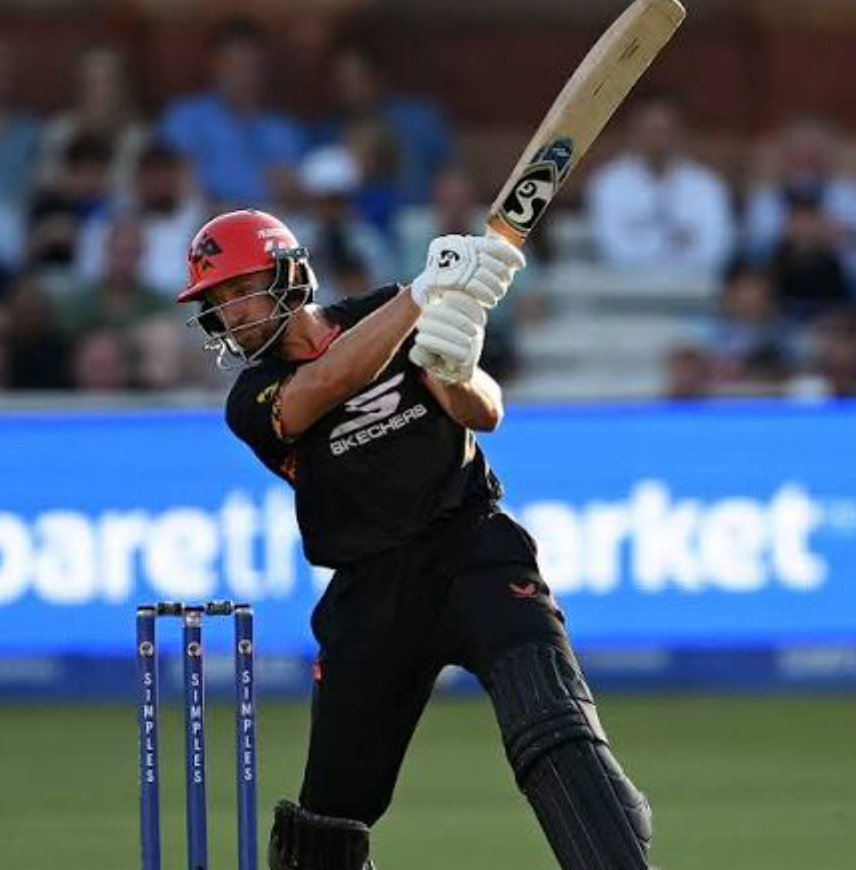
The chase of 163 began for Spirit with a start that could have been more positive. Jonny Bairstow, the wicketkeeper-batsman whose explosive hitting in the powerplay is one of Spirit's primary weapons, lasted three balls. When Spirit batted, Jonny Bairstow didn't hang around, 6-4-W the story of his three-ball innings. A three-ball dismissal for a single-figure score is exactly the kind of start that can derail a chase before it has found its momentum — particularly when the dismissal is the kind of mistimed, misjudged shot that suggests a batsman who has not yet found his competitive rhythm for the evening.
Lhuan-dre Pretorius went next, leaving Spirit at a position that gave Phoenix a brief, fragile window of hope. The total was within range, and with two wickets down before the innings had properly established itself, the Phoenix bowlers — and their supporters — sensed the possibility that the game might not be as lost as the first innings suggested.
Then Liam Livingstone walked to the crease.
Following the departure of the openers, captain Liam Livingstone strode to the crease against his former franchise and seamlessly assumed absolute control of the narrative. Operating in tandem with the prodigious Dewald Brevis, the pair unleashed a terrifying, unyielding assault upon the visiting seamers.
What followed was one of the most complete power-hitting displays Lord's has seen in any format in recent years. Livingstone against his old team — the team he captained, the team whose jersey he wore for multiple Hundred seasons — brought out a level of performance that went beyond simply striking the ball cleanly. There was a competitive sharpness to his batting that occasionally carries a very particular edge when the opponent is a former employer, and the 104-metre six that punctuated his half-century — launched over the Lord's grandstand with a combination of timing and raw power that made the crowd exhale — was the defining image of his innings.
Livingstone going to a 21-ball 50 (which included a 104-metre six), and canny in their match management, seeing off the dangerous Usman Tariq, who conceded just 13 off his 20, and getting the equation down to a run a ball with 45 balls left.
The 21-ball fifty is not simply a personal milestone — it is a tactical statement. In The Hundred's specific format, a 21-ball fifty means you have reached the halfway point of the maximum available balls for any individual innings with the run rate already beyond 140. It means the bowling side has been put under scoring pressure so severe that their field-setting calculations break down, their back-of-a-length deliveries get pulled to the rope, and their yorkers get swept or flicked for boundaries.
Livingstone, the Meerkat Match Hero, said: "We felt like it was a decent wicket, felt they were under par. Bowled really well with new ball, 40 off 40 was really good for us. Batting on that wicket, they were well below par. Trying to be positive in the powerplay, been talking about that but haven't done it so well. Worked well tonight. Love batting with Brev. He's a tremendous talent and he hits the ball as cleanly as anyone in the world. Crowd's been amazing, loved my time down here. Was looking forward to it, the supporters have been amazing, so it's been special."
At Reddy Anna, we cover The Hundred with the same focus and detail that we bring to international cricket, and the Livingstone performance at Lord's on Sunday was the kind of innings that makes The Hundred's format — for all the debates about its relationship with traditional cricket — genuinely compelling as a sport spectacle. The combination of a personal narrative, a world-class batsman at his best, and a Lord's crowd responding to every boundary with the kind of appreciation that only this ground can generate made it one of the Hundred's standout batting moments of the 2026 season.
Dewald Brevis: The Finishing Act
If Livingstone was the headline act of Spirit's chase, Dewald Brevis was the devastating finale — the batsman who took the job from three-quarters done to utterly, emphatically complete with the kind of hitting that makes opponents wonder why they bothered setting a target at all.
Brevis, one of the few batters in T20 cricket who has hit more sixes than fours. The pair were both brutal in their hitting. The description of Brevis as a batsman who has hit more sixes than fours in T20 cricket is one of the most extraordinary individual statistical characterisations in the modern game. It tells you that when Brevis miscues or plays defensively, the ball still reaches the boundary with sufficient frequency to make the six count his highest individual shot category.
The South African's 55 off 31 balls in the Spirit chase was a measured — by his extraordinary standards — innings that reflected both his natural ability and the slightly different demand of finishing a chase rather than setting the initial tempo. When Livingstone was dismissed by Tom Helm for 66 — caught at deep cover after a ferocious assault — the equation still required Spirit to score comfortably and quickly. Brevis understood the requirement and delivered it without any visible anxiety.
Brevis finished things in a hurry, going to an unbeaten 55 off 31 to win the game with a comfortable 18 balls to spare.
The partnership between Livingstone and Brevis — their combined assault across the middle overs, the scoreboard moving at a rate that made Phoenix's 162 look inadequate despite being a target that most Hundred sides would approach with respect — was one of the batting highlights of this Hundred season. Two batsmen of completely different origins, backgrounds, and cricketing paths, finding the kind of natural chemistry at the crease that turns a competitive game into a comfortable win.
"Love batting with Brev. He's a tremendous talent and he hits the ball as cleanly as anyone in the world," Livingstone said in his post-match interview. The compliment from a man who is himself one of the most naturally gifted power-hitters in world cricket lands with particular weight.
At Reddybook, we track The Hundred's individual talent across each edition with the conviction that the competition continues to produce some of the most exciting batting in any cricket format globally, and the Brevis-Livingstone combination at Lord's was the clearest evidence yet that Spirit — despite their position in the table — have two of the competition's most dangerous batsmen operating as a unit. On nights like Sunday, when the partnership clicks, no total is beyond them.
Henry Crocombe: The Debut That Will Be Remembered
In a match dominated by established international names, one of the evening's most compelling storylines belonged to Henry Crocombe — the young Spirit fast bowler making his Hundred debut, handed the ball for a single set of deliveries, and immediately taking the wicket of Phoenix's leading batsman and the tournament's second-highest run-scorer.
Young speedster Henry Crocombe having Clarke caught by Liam Livingstone with the first ball of his only set on debut.
A first-ball wicket in professional cricket is rare enough. A first-ball wicket on debut is extraordinary. A first-ball wicket on debut that removes Joe Clarke — the player who has been Phoenix's one consistent batting weapon throughout a difficult season, who arrived at the crease looking perfectly set and in complete control of the partnership with Dickson — is the kind of moment that gets annotated in a young cricketer's career as the day things changed.
Crocombe's pace was evidently the key — a young speedster who had Phoenix's best batsman caught at deep cover with a delivery that Clarke attempted to put away as he had been doing throughout his 73-run innings. The change of pace, the angle, the surprise element of a debut bowler's first delivery — whatever the specific factors that contributed, the outcome was the removal of the one batsman who had given Phoenix any hope of posting a truly competitive total.
The Hundred's capacity to provide platforms for young cricketers in front of major crowds, at iconic venues, against high-profile opposition is one of the competition's genuine developmental assets, and Crocombe's debut performance — one set, one wicket, the most important wicket available — is exactly the kind of career-launching moment that makes those platforms valuable.
The Bigger Picture: Phoenix's Season in Crisis
While Spirit's victory provided plenty of positive moments to celebrate, the match also deepened the crisis surrounding Birmingham Phoenix that has been building throughout the 2026 Hundred season.
That's the first time they've been beaten by Spirit since the Hundred started five years ago. The historical dimension of Sunday's result adds particular sting — not simply that Phoenix lost, but that they lost to a team they had not been beaten by in the competition's entire five-year history until this evening. History can be used as a shield or as a pressure point; Phoenix's supporters and management will know which way that fact cuts.
Phoenix's fundamental problem in 2026 is structural rather than individual. Joe Clarke has been magnificent — his tournament stats make him one of the competition's two or three best batsmen across the season. Joe Clarke, Phoenix's leading run-scorer by a street and second overall in the tournament. But a competition format that gives each team 100 balls with which to score requires contributions from multiple batsmen, and Phoenix's inability to get partnerships from anyone outside the Clarke-and-partner combination has meant that every innings depends almost entirely on how long Clarke can stay at the crease.
When Clarke goes early — as he did in previous matches — Phoenix collapse rapidly to sub-competitive totals. When Clarke bats deep, as he did on Sunday with Dickson's excellent support, Phoenix post something competitive. But competitive is not enough when the bowling attack cannot then restrict quality opposition batting, and Spirit's Livingstone-Brevis combination on Sunday evening was simply too good for any bowling attack to contain without exceptional execution from every bowler.
The Usman Tariq exception — seeing off the dangerous Usman Tariq, who conceded just 13 off his 20 — shows that individual bowlers can contain even the most dangerous batsmen in The Hundred. But containing Livingstone for 20 balls while Brevis scores freely at the other end, and then watching Brevis accelerate when the Tariq set is complete, is the specific tactical problem that Phoenix's limited bowling resources cannot solve.
Lord's as Theatre: The Hundred at Its Best
It would be remiss, writing about Sunday's match at Lord's, not to acknowledge the specific contribution the venue makes to any Hundred match it hosts. Lord's is not simply a cricket ground — it is a theatre with the most storied history in the sport, a venue where the Long Room, the slope, the Pavilion, and the Grandstand combine to create an atmosphere that feels simultaneously ancient and electric when a major crowd is present for an evening match.
The Spirit home support at Lord's on Sunday evening created exactly that atmosphere — the reactions to Livingstone's 104-metre six, the building noise as Brevis began accelerating in the later stages of the chase, the collective groan and then appreciation when Clarke was finally dismissed by Crocombe. Cricket crowds at Lord's have a particular character — knowing, experienced, not easily impressed — and when they are impressed, the response tells you that what you have witnessed was genuinely worth watching.
At reddy anna book, we believe that cricket's greatest matches are defined by the combination of quality play and memorable venues, and Sunday's Hundred fixture gave Lord's one of its most entertaining evening contests of the 2026 summer. A bottom-of-the-table match between two struggling franchises had no business being this watchable — but Livingstone's homecoming against his old team, Brevis's finishing brilliance, Crocombe's debut wicket, and Clarke's lonely resistance made it appointment cricket from the toss to the final ball.
The Table Picture and What Remains
The result moves London Spirit off the bottom of the Hundred table — though their position remains precarious with most of the competition already played.
A sixth defeat from seven leaves them rooted to the bottom. Remarkably, that's the first time they've been beaten by Spirit since the Hundred started five years ago.
For Spirit, the win provides a platform — not necessarily for qualification, given the mathematical reality of where they stand, but for building the identity and the confidence that next season's campaign will require. Livingstone's leadership this season has been characterised by a determination to find positives and build momentum even when results have been difficult, and Sunday's performance — the bowling discipline, the powerplay planning, the Crocombe debut selection, and the batting partnership that demolished the target — reflected a captain who understands how winning cultures are built from the inside out rather than imposed from the outside in.
For Phoenix, the remaining fixtures offer the opportunity to end what has been an extremely difficult season with some dignity — and to begin identifying the structural changes needed to ensure that 2027 does not replicate the experiences of 2026. Clarke needs better batting support. The bowling attack needs depth. And the opening partnership problem — which has been one of the most persistent weaknesses of their campaign — needs a genuine solution rather than a personnel rotation.


