
The Pandya Trade Saga: Gujarat Demand Collapses, KKR and CSK Circle as MI's Most Expensive Headache Deepens


The most consequential transfer story of the 2026 IPL off-season took another dramatic turn on August 12 when it emerged that Hardik Pandya's attempted return to Gujarat Titans had collapsed — not because the franchise did not want him, not because the finances could not be structured, but because the 32-year-old all-rounder reportedly made one demand that Gujarat Titans simply could not accept: the captaincy.
Hardik Pandya reportedly explored a return to Gujarat Titans, but the move collapsed after he sought the captaincy. Gujarat Titans were open to bringing him back and had discussed the possibility with current captain Shubman Gill, who had agreed that the franchise could trade him back. But when his condition of captaincy was put up, everyone said no to it.
Shubman Gill currently leads Gujarat Titans in the IPL. He also captains India in Tests and ODIs. He is, by any reasonable assessment, one of the two or three most important leaders in Indian cricket at this moment. The suggestion that Gujarat Titans would remove Gill from the captaincy to accommodate Pandya's return — even for a player of Pandya's undoubted talent and historical significance to the franchise — was always going to be a non-starter. And when GT declined, the most direct and emotionally resonant route back for Pandya closed.
What remains is a trade saga that now involves, depending on which report you believe, between five and seven franchises — and a player whose future has become the defining story of Indian cricket's transfer window heading into IPL 2027.
How It Got to This Point: Three Seasons of Turbulence
To understand what is happening in August 2026, you need to trace the thread of events that began when Pandya left Gujarat Titans for Mumbai Indians in November 2023 — a decision that, in hindsight, was the beginning of one of IPL cricket's most turbulent individual stories.
Pandya took over as MI captain in a tumultuous manner ahead of the 2024 season. The manner of his arrival at Mumbai Indians — replacing Rohit Sharma as captain of a franchise that had won five IPL titles under Rohit's leadership and whose fanbase was deeply, vocally attached to the man who had delivered those titles — set the tone for what followed. The reception from Mumbai's supporters was hostile from the first match of the 2024 season, and that hostility found expression in social media campaigns, stadium chants, and the sustained negativity that made Pandya's first MI season one of the most uncomfortable public experiences any Indian cricketer had endured in recent memory.
The cricket results made everything worse. MI finished last that year. Last place. Ten teams in the IPL, and Mumbai Indians — five-time champions, the most successful franchise in the competition's history — finished at the bottom of the table in Pandya's first year as captain. The combination of fan hostility, leadership pressure, and catastrophic results produced a crisis that the franchise spent the entire off-season attempting to manage.
2025 offered partial rehabilitation. In 2025, they made the playoffs. The improvement was genuine — Pandya's own performances were better, the team's cohesion showed signs of development, and the playoff qualification gave both the captain and the management some basis for optimism about what a fully settled version of this team might achieve. Reports of rifts within the dressing room surfaced occasionally but were denied, and the public narrative shifted, slightly, from catastrophe to cautious recovery.
Hardik Pandya, retained by Mumbai for Rs 16.35 crore ahead of IPL 2026, delivered 206 runs across ten appearances at a strike rate of 138.25 and took four wickets. The numbers are serviceable for a lower-middle-order batsman with bowling responsibilities in certain matches. For a player retained at Rs 16.35 crore — the franchise's most expensive asset — they represent a return on investment that the management cannot have found satisfactory.
Under his leadership, MI failed to reach the playoffs. They finished in ninth place, winning only four and losing 10 of their 14 matches. Ninth place. Four wins. The second-worst campaign in Mumbai Indians' history. And this time, unlike 2024, the cushion of novelty and adjustment that could be cited as mitigating factors was no longer available. By IPL 2026, Pandya had been MI captain for three seasons. The results were what they were.
The GT Collapse: Why the Captaincy Demand Was Impossible
The reported chain of events around the Gujarat Titans approach is one of the most significant IPL transfer stories in the competition's off-season history, and the detail of how close the deal came before the captaincy demand ended it makes the collapse all the more striking.
According to a report by The Indian Express, Gujarat Titans were open to the possibility of bringing Hardik back and had reportedly discussed the idea with their current captain, Shubman Gill. However, the proposed trade ultimately failed to progress because Hardik reportedly wanted to return as captain.
The sequence — GT open to a deal, GT discuss with Gill, Gill reportedly comfortable with Pandya's return — suggested a remarkably straightforward path to one of the most emotionally compelling IPL stories possible. Hardik Pandya, the man who led Gujarat Titans to their inaugural IPL title in 2022, returning to the franchise he built. The prodigal son, back where it started, in the colours where he first proved he could captain an IPL side to glory.
"The franchise was fine with him making a return. They had even discussed the same with its captain Shubman Gill, and he, too, had agreed that the franchise could trade him back. But when his condition of captaincy was put up, everyone said no to it," a source told The Indian Express.
The reason GT said no is not simply pride or institutional loyalty to Gill, though both of those things are genuinely present. The reason is more fundamental: Shubman Gill captaining Gujarat Titans is not a separable question from Shubman Gill captaining India. The two leadership roles have become intertwined in ways that make removing him from one of them — particularly for the sake of accommodating a returning player's personal condition — effectively impossible without significant collateral consequences.
Gill currently leads Gujarat Titans in the IPL and is also India's captain in Tests and ODIs. An IPL franchise removing its captain to satisfy a trade demand — when that captain is also the national Test and ODI captain — is not a routine personnel decision. It is a statement with implications that stretch from the franchise dressing room to the BCCI's boardroom, and nobody at Gujarat Titans was prepared to make it.
At Reddy Anna, we have followed IPL transfer dynamics across every season since the competition began, and the Pandya-GT situation is one of the clearest examples of how the personal and institutional narratives of cricket's franchise economy intersect in ways that make individual deals possible or impossible regardless of the financial logic.
The Field: Seven Franchises and What Each Wants
With Gujarat Titans now firmly out of the race, the Pandya trade story has narrowed to a smaller field of bidders — but a field whose intensity has been described by multiple reports as the most competitive off-season trade competition in IPL history.
Seven of the Indian Premier League's ten teams have made preliminary inquiries about Mumbai Indians' captain, with Chennai Super Kings, Delhi Capitals and Lucknow Super Giants joining the Kolkata-led pursuit in what is shaping up as the most consequential trade story in the tournament's off-season history.
Kolkata Knight Riders have emerged as the frontrunner in almost every credible report, and the logic is clear. With Ajinkya Rahane having announced his retirement, KKR are looking for a new captain for the upcoming season. While nothing is official yet, reports have linked Pandya with a move to KKR ahead of the next season, potentially as captain. Some reports claimed that he has been offered a package of Rs 30 crore plus captaincy.
The KKR proposition is the most straightforward of the available options from Pandya's perspective — a franchise without an established captain, willing to pay Rs 30 crore, willing to hand him the leadership role that his Gujarat Titans demand was premised on. If the reports are accurate, KKR is not simply offering Pandya a trade destination. They are offering him the specific combination of financial recognition and leadership responsibility that his recent career has been seeking.
Chennai Super Kings have tabled the most creative offer. CSK has tabled Shivam Dube and Dewald Brevis plus cash. The inclusion of Brevis in any trade package is significant — the South African prodigy is one of the most exciting young batting talents in the competition, and his inclusion represents CSK's acknowledgment that MI need assets in return rather than simply financial compensation. Whether Mumbai Indians would value Dube and Brevis alongside cash above the alternatives on offer from other franchises is the question that MI's management must answer.
Delhi Capitals have offered the most technically interesting swap. DC could offer an Axar Patel swap to fix their spin and lower-order needs while freeing up an overseas slot for an extra pacer. Axar Patel is one of the most reliable all-rounders in the IPL — a left-arm spinner who bats competently and delivers consistently in pressure situations. For Mumbai Indians, whose spinning all-round department has been one of their structural weaknesses across recent seasons, an Axar acquisition could address a genuine squad gap. The question is whether Axar's value to MI matches Pandya's value to DC.
Lucknow Super Giants have been mentioned in connection with a Pandya trade that would involve Nicholas Pooran — a batsman of extraordinary hitting ability who could transform MI's middle-order output. Other hypothetical pairings, like shipping Pandya for Rajasthan's Yashasvi Jaiswal or Lucknow's Nicholas Pooran, lack any concrete backing at this stage.
Mumbai Indians: What They Actually Want
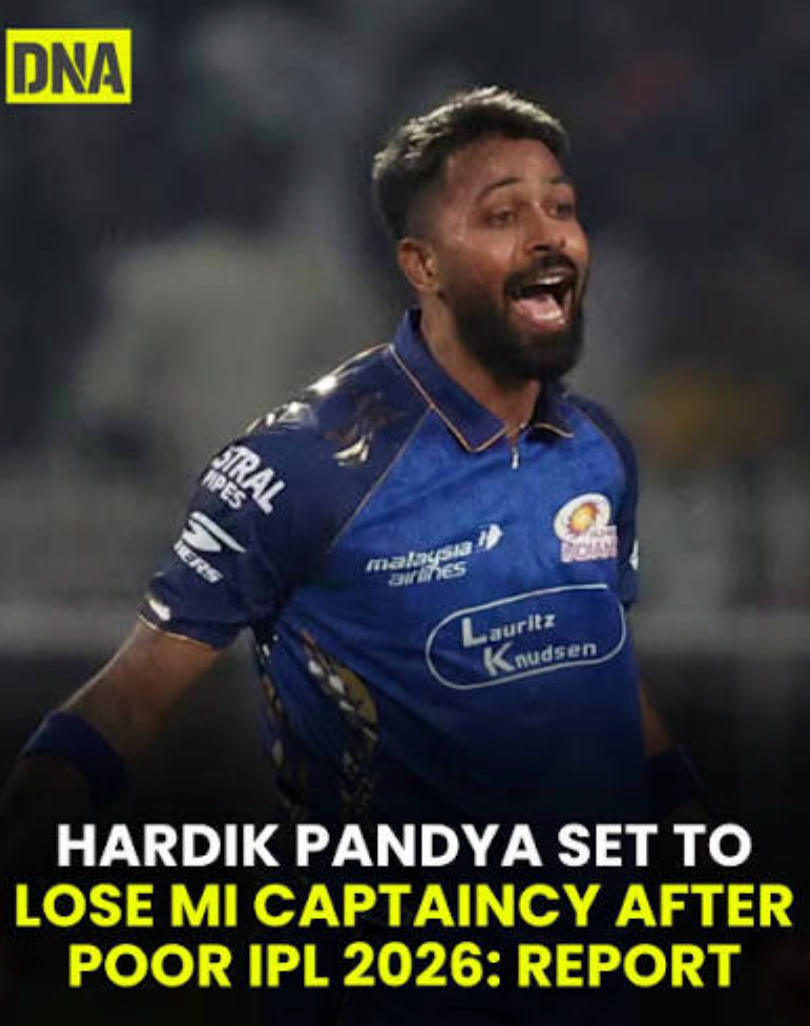
The most important variable in the entire trade saga is one that MI have been studiously vague about: what do they actually want from a Pandya trade, and have they decided they want one at all?
Mumbai's threshold for a trade would demand both a premier batsman and bowler in return. This is the key clarification that shapes every negotiation — MI are not selling a surplus player at a discount. They are trading their most expensive asset, their captain, and they expect value that addresses real squad needs in return. A premier batsman and a bowler. Not one or the other. Both.
That threshold makes the CSK offer of Dube and Brevis the closest to meeting Mumbai's stated requirements — Dube as a batting all-rounder who contributes with the ball, Brevis as one of the competition's most exciting young batsmen — but whether Mumbai regard either player as truly "premier" in the sense their threshold demands is the question that makes the CSK negotiation genuinely uncertain.
Pandya's spokesperson categorically denied that the all-rounder had directly approached any franchise. "Hardik Pandya had no direct conversation with any franchise whatsoever regarding transfer trade or otherwise. If any approach has been made to him, that has been directed to the MI franchise," the spokesperson said.
The spokesperson statement is the standard denial that accompanies any transfer saga — necessary, formulaic, and largely unrelated to what is actually happening in the conversations between franchise representatives and player management. What is clear from the accumulation of credible reports is that multiple franchises have made approaches to MI, that MI's management is actively evaluating their options, and that no decision has been made public.
At Reddybook, we track IPL franchise decisions with the conviction that the economics of transfer windows reveal as much about franchise strategy and player value as any on-field performance — and the Pandya saga reveals something specific about where MI believe they are: a franchise needing a reset, willing to trade their captain if the value is right, but not willing to take a loss on an asset of this magnitude for the sake of resolving a difficult situation quickly.
Pandya's Career in Context: The Talent That Makes This Complicated
The reason this saga has generated so much attention and so many competing bidders is not simply the drama of the personalities and franchises involved. It is because Hardik Pandya, at 32, remains one of the most talented all-round cricketers in IPL history — and the gap between that talent and the recent results makes his current situation genuinely difficult to evaluate.
Pandya missed four of MI's IPL 2026 matches due to illness and injury. In 10 matches, he scored 206 runs at an average of 22.88 and a strike rate of 138.25, with a best of 40. With the ball, he picked up just four wickets. The numbers are disappointing. They are the numbers of a player who was not fit, not in form, and not finding the specific match situations in which his skills produce their maximum value. They are not the numbers of a player who has lost his ability.
At his best — which the 2022 Gujarat Titans season most clearly illustrated — Pandya is the IPL's ultimate impact player: a batsman who can change a match's tempo in six balls, a bowler who can take critical wickets in the death overs when the situation is most pressured, and a captain whose man-management skills and tactical instincts produced an IPL title in a franchise's debut season. That player still exists. The body and the circumstances have not consistently allowed him to express that quality at MI across three seasons.
The franchise that gets Pandya in 2027 — at the right price, with the right supporting cast, in conditions where his specific skills are valued and his leadership is welcomed rather than contested — could be getting one of the most impactful players in the competition. The franchise that overpays, or that positions him poorly, or that inherits the leadership tensions that have shadowed his MI tenure, could be repeating MI's experience.
What Happens Next: The Timeline and the Decision Points
The IPL transfer window operates within specific BCCI-defined timelines, and the decisions that need to be made about Pandya's future will be shaped by those deadlines as much as by the ongoing franchise negotiations.
MI's management has said publicly that no decision has been made. Mumbai says no decisions have been made. That is the truthful position — at the time of writing, Pandya remains Mumbai Indians' retained all-rounder and captain. The trade saga is still a saga rather than a concluded story.
The realistic timeline involves several decision points. MI must determine whether they genuinely want to trade Pandya before the window closes. The bidding franchises must firm up their offers from preliminary interest into concrete proposals. And Pandya's camp — whatever their public position on direct franchise contact — must eventually communicate clearly which destination they would accept and under what conditions.
The Gujarat Titans route is closed. The captaincy demand that ended it is the most revealing detail of the entire saga — it tells you that Pandya's primary motivation in any trade is not the salary or the franchise's historical significance, but the leadership role. He wants to captain an IPL team. He wants the specific combination of financial recognition and leadership responsibility that his talent justifies but that his MI tenure has not delivered in the way either party hoped.
At reddy anna book, we believe the most important cricket stories are those that reveal something real about how the game's ecosystem works — how talent, ego, institutional loyalty, financial logic, and human relationships combine to produce decisions that shape franchises for years. The Pandya trade saga is one of those stories. Its resolution — whether he stays at MI, moves to KKR for Rs 30 crore, goes to CSK with Dube and Brevis, or finds a different outcome entirely — will be one of the defining moments of IPL 2027's pre-season.
The Broader Implications: What the Trade Window Reveals
The Pandya situation exists within a broader context of IPL franchise restructuring that makes August 2026 one of the most consequential pre-season periods in the competition's history.
Multiple franchises are simultaneously in transition. KKR have lost Rahane to retirement and need a new captain. CSK's roster is ageing and requires fresh match-winning talent. Delhi Capitals have been inconsistent for multiple seasons and are looking for the identity marker that transforms a good squad into a championship contender. Lucknow are building around Nicholas Pooran and need complementary match-winners around him.
Pandya's availability — or potential availability — sits at the intersection of all these franchise needs, and the competition for his services is a direct consequence of what he offers that no free agent or IPL auction purchase can replicate: a ready-made match-winner with proven IPL experience, IPL title credentials, and the specific all-round skill set that every franchise's recruitment model identifies as the highest-priority acquisition target.
The immediate trigger is visible in the numbers. Hardik Pandya, retained by Mumbai for Rs 16.35 crore ahead of IPL 2026, delivered 206 runs across ten appearances at a strike rate of 138.25 and took four wickets — serviceable in most contexts, thin return on a marquee salary. Mumbai finished ninth with four wins, their worst campaign in recent memory.
The saga will conclude — it must, before the trade window closes. Whether it concludes with Pandya in purple and gold at KKR, in yellow at CSK, in blue and gold at DC, or in a resolution that keeps him at MI under restructured terms, the decisions made in the coming weeks will shape the 2027 IPL season's competitive landscape more than any single player's movement has shaped it since Pandya's own transfer from Gujarat Titans to Mumbai Indians in November 2023.
That transfer changed three franchises' trajectories simultaneously. Its sequel, now being written in negotiations across Mumbai, Ahmedabad, Kolkata, and Chennai, will likely do the same.


